Travel Guide vs Travel Itinerary: What's the Difference?

When planning a trip, the first two things you usually do are create an itinerary and collect recommendations.
As both of these activities help to organise a trip, many travellers assume that they are the same thing.
They're not.
An itinerary helps you organise when and where you go. A travel guide helps you decide what to do, why it's worth doing, and how to get the best possible experience. Understanding the difference helps you choose the right tool for every stage of the planning process.
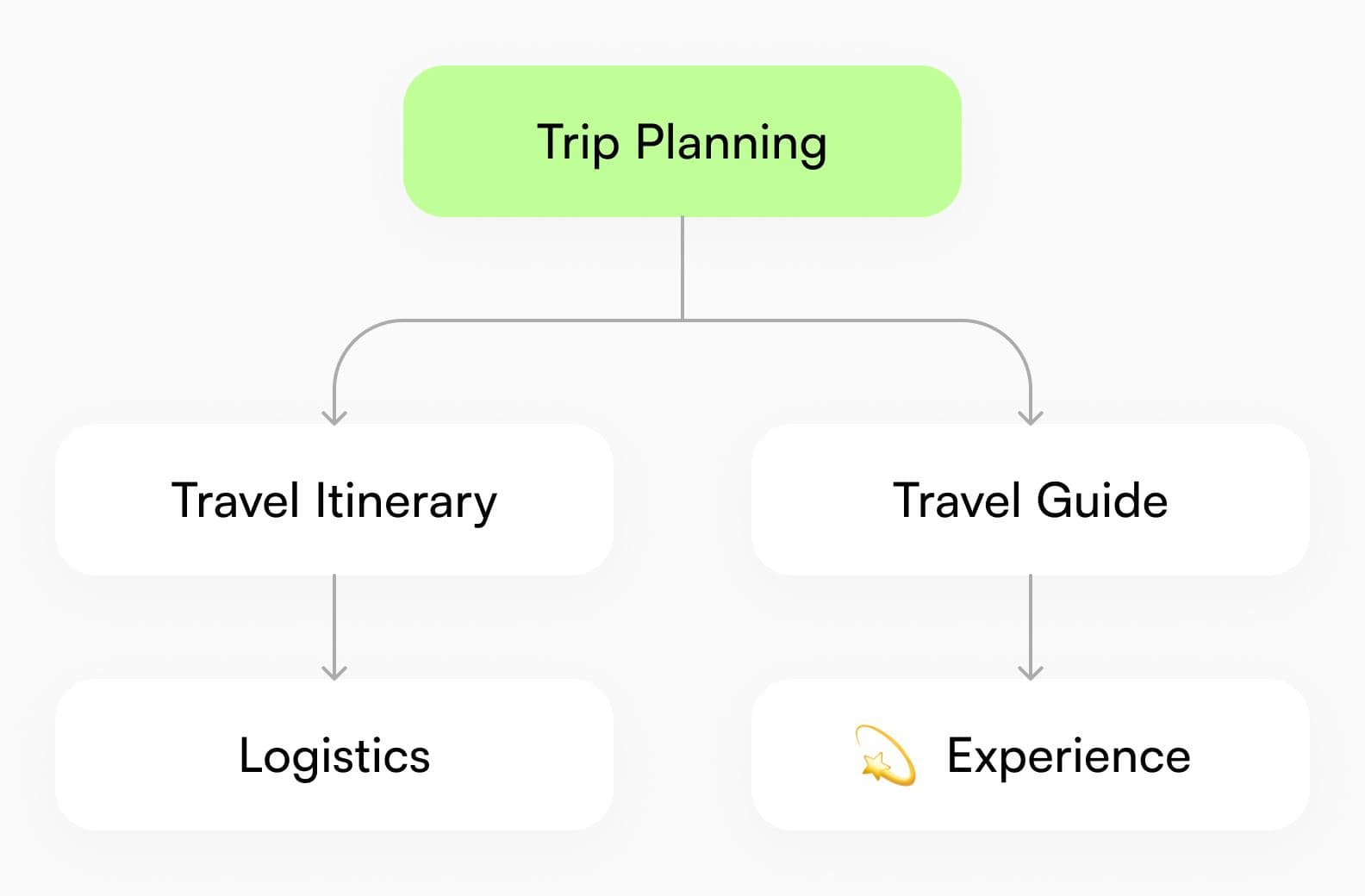
What is a travel itinerary?
A travel itinerary is a trip plan organised by time.
Its main purpose is to help travellers understand the sequence of activities and manage the logistics of their trip.
An itinerary usually includes:
- travel dates;
- flights and transport;
- hotel bookings;
- check-in and check-out times;
- excursions and activities;
- key time points along the route.
Essentially, an itinerary answers the question: ‘Where do I need to go and when?’
It helps you remember important details and keep your trip under control.
What does a travel itinerary usually include?
The structure of an itinerary may vary depending on the type of trip, but most often includes:
- travel dates and times;
- flights and transportation;
- accommodation details;
- planned activities;
- bookings and reservations.For a detailed structure and ready-to-use examples, see our Travel Itinerary Template guide.Example of a travel itinerary

This itinerary clearly shows where you need to be and when.
However, it doesn't explain why a place is worth visiting, what to expect, or how to make the most of your visit.
This is precisely the area in which a travel guide can add value.
What is a travel guide?
A travel guide is a broader format.
It not only shows the route but also provides context, recommendations and expert knowledge to help travellers make decisions during their trip.
In addition to the route, a travel guide may include:
- recommendations for places;
- maps and locations;
- local tips;
- alternative options;
- practical information;
- the author’s comments;
- recommendations on when to visit.
Essentially, a travel guide answers the questions:
‘What is worth doing?’
‘Why is it interesting?’
‘How can I get the best experience?’
Travel Itinerary vs Travel Guide: Key Differences
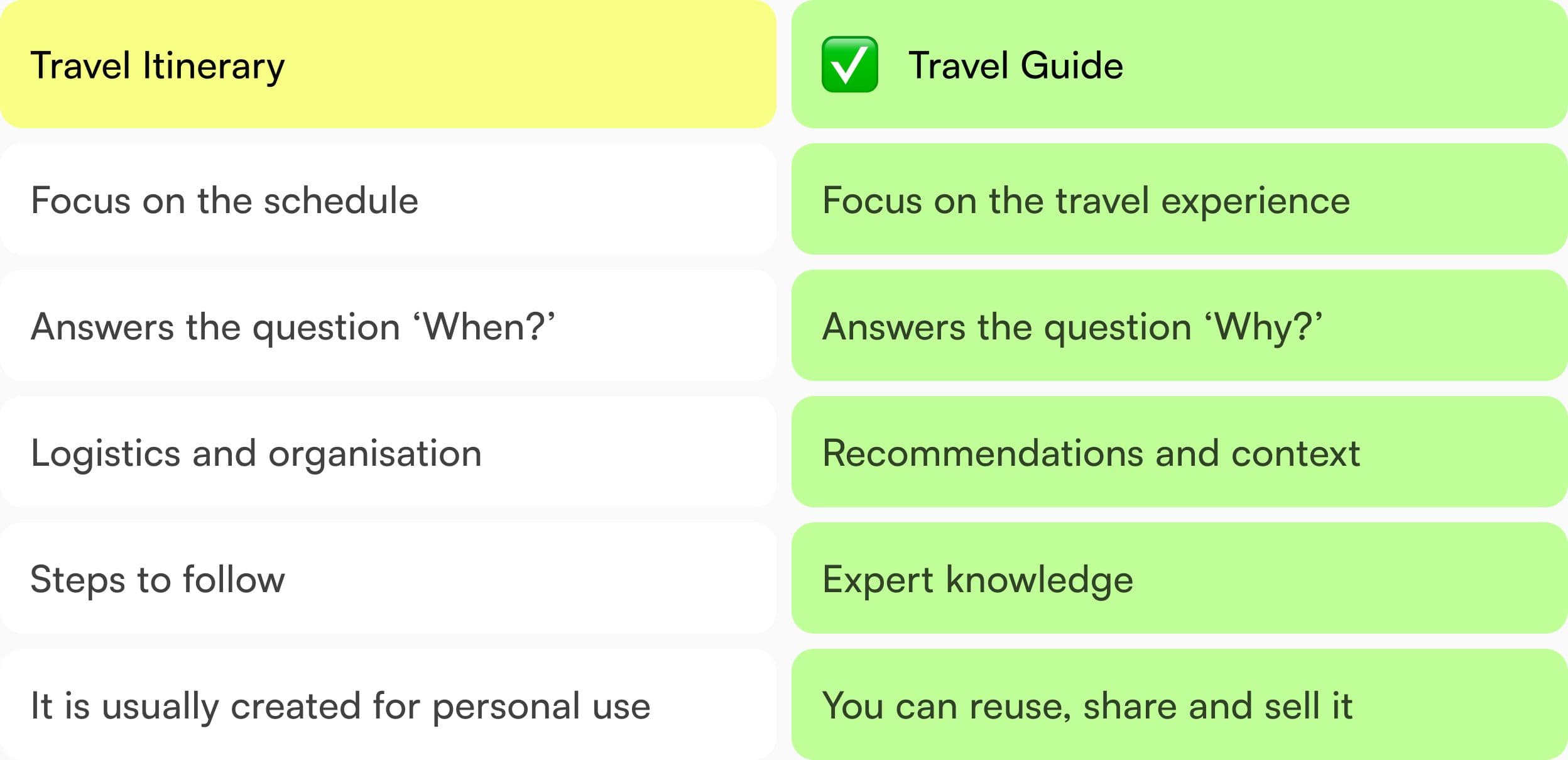
Although both tools are useful for travellers, they serve different purposes.
The same day in two formats
The difference between an itinerary and a guide becomes particularly apparent in practice.
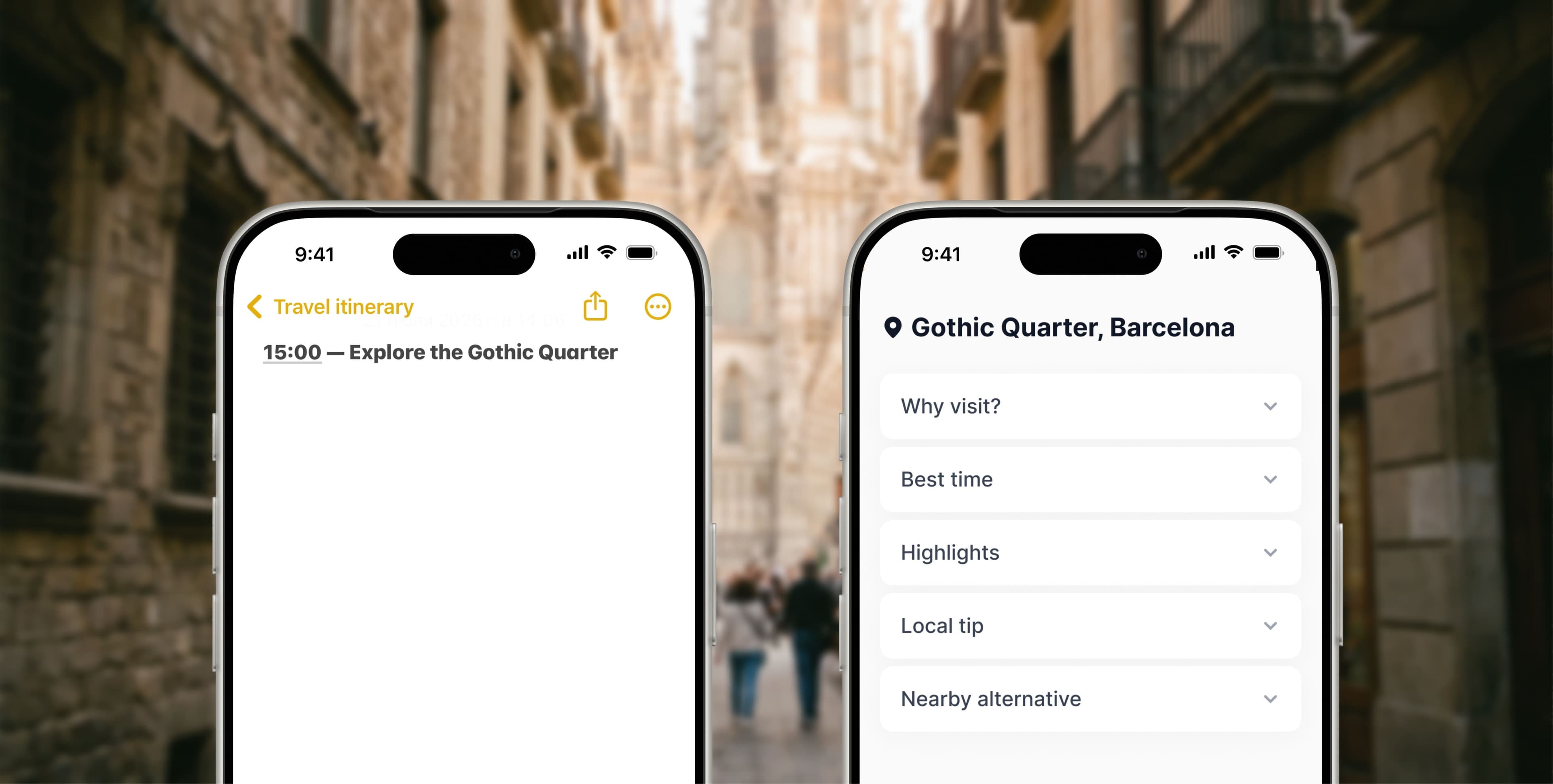
Both examples refer to the same place.
But a travel guide provides much more context and helps you have a better experience.
When do you need a travel itinerary?
It is particularly useful if you need to:
- organise flights and transport
- manage bookings
- plan a complex route
- travel in a group
- coordinate the timing of your trip
First and foremost, it is a planning tool.
When is a travel guide needed?
A travel guide is more useful when the travel experience itself is important.
For example, when exploring a new city, finding local spots, travelling independently, seeking expert recommendations or creating ready-made itineraries for clients or an audience.
It is a tool for sharing knowledge and experience.

Can a travel guide include an itinerary?
Yes.
In practice, modern digital travel guides often include an itinerary as one of their features.
The itinerary helps to organise the trip, while the guide provides context, recommendations, and local knowledge.
This is precisely why many modern digital travel guides combine both approaches in a single format.
The user receives a schedule and an understanding of how to use their time as effectively as possible.
Which should you choose?
If you just want to organise a trip, a travel itinerary is sufficient.
However, if you want recommendations, context and expert knowledge about the destination, a travel guide is better.
In many cases, the most effective solution is a combination of both.
This is precisely why modern digital travel guides increasingly combine routes, maps, recommendations and local tips in one place.
FAQ
What is a travel itinerary?
A travel itinerary is a structured plan for a trip, including a schedule, bookings, transport and key activities.
What does a travel itinerary include?
It usually contains travel dates, flights, hotels, transport, tours and other planned activities.
How does a travel itinerary differ from a travel guide?
While a travel guide provides recommendations, context and expert knowledge about destinations, an itinerary helps organise a trip chronologically.
Can a travel guide contain an itinerary?
Yes. Most modern digital travel guides include an itinerary as part of their overall structure.
Which is better to use for independent travel?
For most independent trips, it is best to use both: an itinerary helps to organise the trip, while a guidebook enhances the experience.
Conclusion
Travel itineraries and travel guides are complementary tools that solve different problems.
An itinerary helps you organise the timing and locations of your trip.
A travel guide helps you decide what to do and how to make the most of your time.
This is why modern digital travel guides increasingly combine both approaches.
Rather than having to choose between planning and recommendations, travellers can access everything they need in one place: a clear itinerary, local insights, practical information, and expert recommendations.
The result is a better plan.
It's a better travel experience.