What is a digital travel guide? Definition, examples and benefits

The way we plan trips has long since moved on from paper guidebooks and lists of places in phone notes.
Nowadays, travellers save dozens of locations on maps, gather recommendations from social media, take screenshots, make notes and share links via messaging apps. However, as the volume of information grows, it becomes increasingly difficult to turn it into a clear, convenient travel plan.
This is precisely why digital travel guides are becoming so popular: they bring together itineraries, recommendations and practical information in one place.
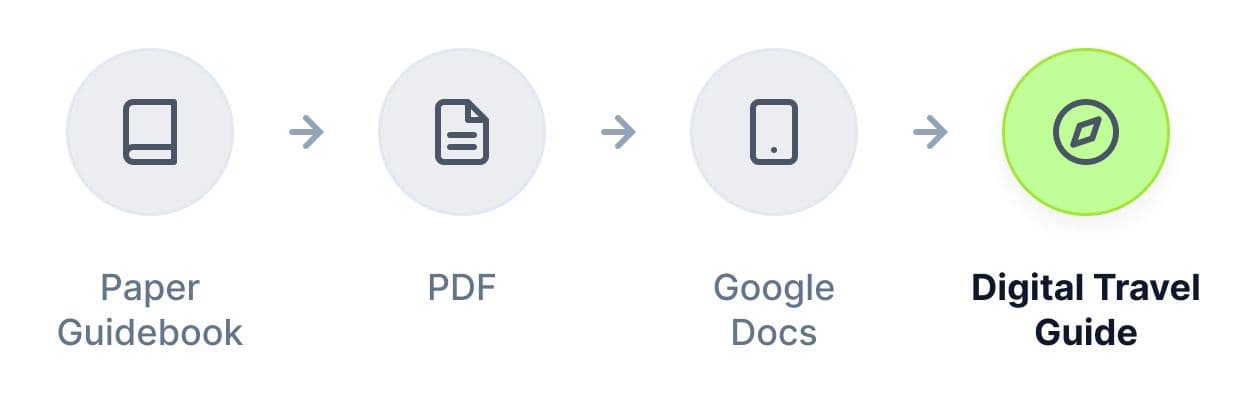
What is a digital travel guide?
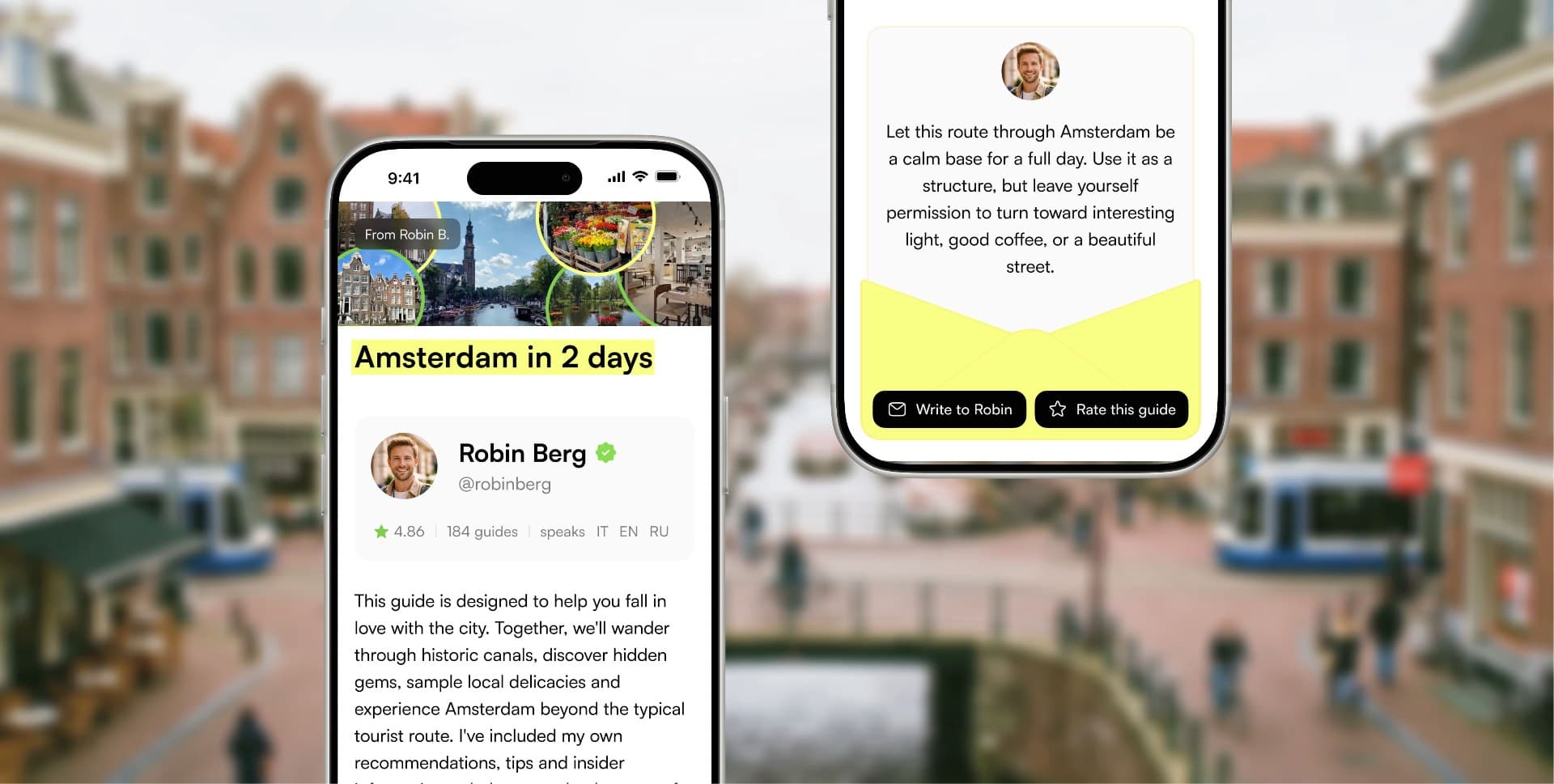
A digital travel guide is a structured online guide that helps travellers navigate their trip and access all the necessary information in a single format.
Unlike a standard list of recommendations or a PDF document, a digital travel guide combines the following:
- a day-by-day itinerary;
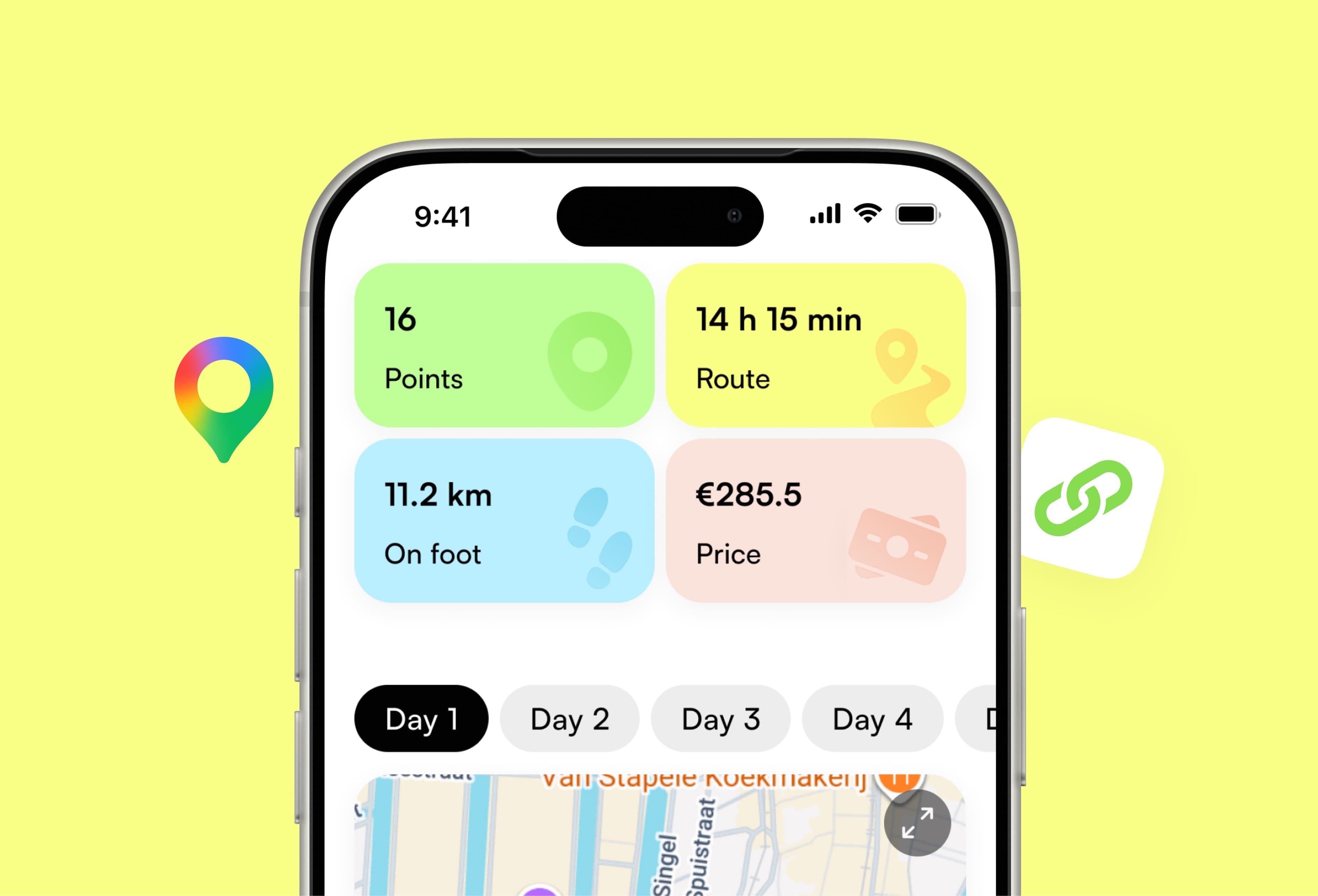
- a map with marked locations;
- recommendations and tips;
- logistics and transport;
- the author’s personal comments.
In short, it's not just a list of places to visit, but a structured travel experience that combines recommendations, logistics and local knowledge in one place.
Rather than having to consult separate links and notes, users receive a comprehensive experience that is convenient to use during their trip.

What Does a Digital Travel Guide Usually Include?
Although each digital travel guide is unique, most of them have a similar structure that is designed to help travellers find everything they need in one place.
A typical guide usually includes:
Itinerary
A day-by-day plan or suggested route to help travellers understand the flow of their trip and organise their time.
Maps and Locations
Use interactive maps and saved locations to easily navigate, estimate travel times and plan efficient routes.
Recommendations and Local Insights
A digital travel guide is more than just a list of places; it explains why a location is worth visiting, what to expect, and how to make the most of your experience.
Practical Information
It provides useful details such as opening hours, transport options, reservation requirements and estimated costs, as well as other information that travellers may need during their trip.
These elements combine to transform disparate recommendations into a single, easily accessible travel resource.
Want to learn how to build an effective travel guide? Read our complete guide: How to Create a Travel Guide →
How does a digital travel guide differ from an itinerary?
Many people confuse a travel guide with a travel itinerary.
In practice, they are different things.
An itinerary answers the question, ‘Where to go and when?’
A travel guide answers the questions ‘What should I do?’, ‘Why is it worth doing?’ and ‘How can I get the best experience?’
Itineraries usually contain only a sequence of actions.
In contrast, a travel guide includes context, recommendations, tips, the logic behind movements and alternative scenarios.
This is why a travel guide is considered a comprehensive product rather than just a travel plan.
Who Creates Digital Travel Guides?
Today, digital travel guides are used in a wide variety of situations.
For travellers
Independent travellers create their own guides to organise trips and conveniently store information.
For travel creators
Bloggers and content creators turn their recommendations into a fully-fledged digital product that can be shared with their audience.
For guides and local experts
Professional guides use travel guides as a supplement to tours or as a standalone product.
For hosts and property owners
Hosts create local guides for guests with recommendations for restaurants, neighbourhoods, attractions and useful information about the city.
Why are digital travel guides becoming more popular?
The rise in popularity of digital travel guides is linked to several changes in the market.
Firstly, the volume of information is constantly increasing. Modern travellers use maps, social media, blogs, videos, notes and dozens of other sources simultaneously.
Secondly, users expect a more convenient and structured experience. People are becoming less and less interested in receiving lists of links or long messages with recommendations. They want a ready-made format that they can use immediately.
Thirdly, knowledge and experience are increasingly being transformed into standalone digital products.
What used to exist in the form of advice and correspondence is gradually becoming a fully-fledged asset that can be reused, scaled up and monetised.
Key benefits of digital travel guides
📄 Everything in one place
No need to switch between maps, notes, documents and messages.
All information is gathered in a single format.
📤 Easy to share
A finished travel guide can be sent to a client, friend, subscriber or guest with just a single link.
🔄 Easy to update
Unlike PDF files or documents, digital guides can be edited and updated at any time.
🕓 Can be used repeatedly
Once created, a travel guide can be used again and again without the need to gather information manually each time.
💸 Reusable Knowledge
For guides, travel creators and local experts, a digital travel guide offers a new way to sell their knowledge and experience.
FAQ
What is the difference between a digital travel guide and a travel itinerary?
A travel itinerary focuses on the schedule and sequence of activities. In contrast, a digital travel guide provides additional context, recommendations, practical information, maps, and local insights to help travellers make the most of their trip.
Can a digital travel guide be shared with other people?
Yes. Most digital travel guides are designed to be shared easily via a link, which makes them convenient for travellers, clients, guests and communities.
What should a digital travel guide include?
A digital travel guide usually contains an itinerary, maps, recommendations, practical information, local insights and travel tips. The exact structure varies depending on the guide's purpose and audience.
Who creates digital travel guides?
Digital travel guides are created by travellers, travel bloggers, professional tour guides, local experts, hosts, and travel businesses who want to organise and share travel information in a structured way.
Are digital travel guides better than PDF guides?
Although PDF guides can be useful, digital travel guides are often easier to update, share and access across devices. They can also present maps, recommendations and itineraries in a more interactive way.
Can digital travel guides be sold online?
Yes. Many travel creators, guides and local experts use digital travel guides as products that can be shared, distributed or sold to audiences.
Why are digital travel guides becoming more popular?
Travellers now expect structured, easy-to-use information rather than scattered links, screenshots and messages. Digital travel guides bring everything together in one place, creating a better travel experience.
How is a digital travel guide different from Google Maps?
Google Maps helps people to save and navigate to locations. A digital travel guide provides additional context, recommendations, itineraries, logistics and local knowledge, turning these locations into a complete travel experience.
Conclusion
Digital travel guides represent the next logical step in the evolution of travel information.
Whereas recommendations used to come in the form of messages, documents and scattered notes, more and more people today are looking to turn them into a structured, user-friendly product.
This is precisely why the digital travel guide is no longer merely a means of storing information, but is gradually becoming the new standard for creating, sharing and utilising travel knowledge.