Daria
@barcelonalocal
From Daria
@barcelonalocal
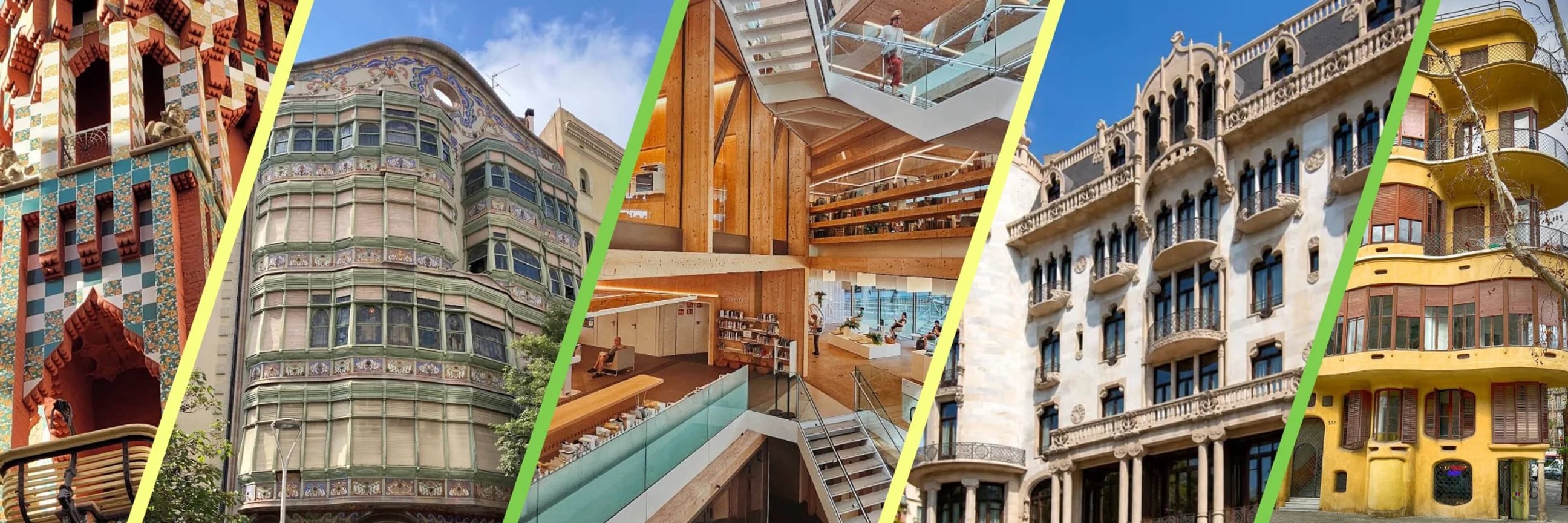
For architecture enthusiasts, this collection offers a unique way to experience Barcelona through its buildings. While the city is celebrated for its famous architectural marvels, some of its most compelling stories are found in places you might otherwise overlook. This collection invites you to delve beyond the typical landmarks, showcasing remarkable structures that span from Gaudí's early works and hidden Modernist treasures to historical institutions and audacious contemporary designs. Take your time, observe closely, and, whenever possible, step inside these fascinating places, noticing the intricate details that make each one distinct.
— Daria
10
Places
21-22 USD
Price
Pl. de la Universitat, Eixample, 08007 Barcelona, Spain
Built in the second half of the 19th century, this historic building of the University of Barcelona is a fine example of Neo-Romanesque architecture. Designed by architect Elies Rogent, it was one of the first major public buildings to appear in the expanding Eixample district. Its architecture, with its brickwork, stone, towers, and arcades, draws inspiration from medieval Catalan design, creating an almost monastic atmosphere. Inside, visitors can explore historic halls, including the Paranimf and the Aula Magna.
Tip from Daria
The real highlight of Barcelona's historic University Building isn't the grand façade facing Gran Via — it's what lies beyond it. Step through the main entrance and let the transition do the work: the noise of Gran Via gives way to two inner courtyards lined with elegant arched arcades, almost like the cloisters of a small monastery, and then opens out further into the Ferran Soldevila Garden tucked behind the building. This tranquil pocket of greenery, complete with a pond and lush planting, is one of the most unexpectedly peaceful spots in the entire neighbourhood — a world away from the bustle just outside. If you get the chance, it's well worth poking your head into the historic interior spaces too: the building houses an Aula Magna, a Paranimf, a library, and a sweeping grand staircase. The university does offer guided tours on request, and certain areas may be open to visitors depending on the programme and time of day, so it's worth checking ahead.
Price
Free
Built in the second half of the 19th century, this historic building of the University of Barcelona is a fine example of Neo-Romanesque architecture. Designed by architect Elies Rogent, it was one of the first major public buildings to appear in the expanding Eixample district. Its architecture, with its brickwork, stone, towers, and arcades, draws inspiration from medieval Catalan design, creating an almost monastic atmosphere. Inside, visitors can explore historic halls, including the Paranimf and the Aula Magna.
Tip from Daria
The real highlight of Barcelona's historic University Building isn't the grand façade facing Gran Via — it's what lies beyond it. Step through the main entrance and let the transition do the work: the noise of Gran Via gives way to two inner courtyards lined with elegant arched arcades, almost like the cloisters of a small monastery, and then opens out further into the Ferran Soldevila Garden tucked behind the building. This tranquil pocket of greenery, complete with a pond and lush planting, is one of the most unexpectedly peaceful spots in the entire neighbourhood — a world away from the bustle just outside. If you get the chance, it's well worth poking your head into the historic interior spaces too: the building houses an Aula Magna, a Paranimf, a library, and a sweeping grand staircase. The university does offer guided tours on request, and certain areas may be open to visitors depending on the programme and time of day, so it's worth checking ahead.
Price
Free
Gran Via de les Corts Catalanes, 491, Eixample, 08015 Barcelona, Spain
This unusual Modernist manor, often called El Xalet ("The Chalet"), stands right in the middle of Eixample. Its architecture isn't the only interesting thing about it: when the house was slated for demolition, locals successfully campaigned to save it. Today, it operates as a cultural centre.
Tip from Daria
Casa Golferichs is one of those Eixample gems that rewards a second look. Unlike most buildings in the neighbourhood, it has three exposed facades — an unusual luxury in such a densely packed grid. The mix of stone and brick gives it an almost medieval character that feels wonderfully out of place against the surrounding urban blocks. Take a moment to appreciate just how striking it looks hemmed in by the city on all sides. If the cultural centre happens to be open when you visit, don't just stop at the facade — head inside. It's well worth it, and far more rewarding than a quick photo from the pavement.
Price
Free
Opening Hours
Mon-Fri, 10:00- 20:00; Sat-Sun, Closed
This unusual Modernist manor, often called El Xalet ("The Chalet"), stands right in the middle of Eixample. Its architecture isn't the only interesting thing about it: when the house was slated for demolition, locals successfully campaigned to save it. Today, it operates as a cultural centre.
Tip from Daria
Casa Golferichs is one of those Eixample gems that rewards a second look. Unlike most buildings in the neighbourhood, it has three exposed facades — an unusual luxury in such a densely packed grid. The mix of stone and brick gives it an almost medieval character that feels wonderfully out of place against the surrounding urban blocks. Take a moment to appreciate just how striking it looks hemmed in by the city on all sides. If the cultural centre happens to be open when you visit, don't just stop at the facade — head inside. It's well worth it, and far more rewarding than a quick photo from the pavement.
Price
Free
Opening Hours
Mon-Fri, 10:00- 20:00; Sat-Sun, Closed
Carrer de les Carolines, 20-26, Gràcia, 08012 Barcelona, Spain
Casa Vicens Gaudí is one of Gaudí's most unique homes and his first major project in Barcelona. Built as a summer residence for stockbroker Manuel Vicens, the house breaks from Gaudí's typical style, blending ceramic, brick, iron, and vibrant Eastern and Neo-Mudéjar motifs.
Tip from Daria
Casa Vicens is one of Gaudí's earliest works, and knowing what to look for makes the visit far more rewarding. On the facade, seek out the green and white ceramic tiles decorated with plant motifs — Gaudí was essentially transplanting the garden onto the building's exterior. Notice too the Oriental-influenced ornamental turrets; this was a young architect still working in an exotic, eclectic idiom, long before the fluid organic language of Casa Batlló or the Sagrada Família took shape. Look closely at the windows and wrought-iron grilles as well — these aren't merely decorative flourishes but integral components of a unified architectural system. One practical tip: don't limit yourself to admiring the house from Carrer de les Carolines. Go inside if you possibly can. The interior reveals just how total Gaudí's vision really was — ceilings, furniture, lighting, and even ventilation were all conceived as part of a single, cohesive whole.
Price
21-22 USD
Opening Hours
Mon-Sun, 09:00- 20:00
Casa Vicens Gaudí is one of Gaudí's most unique homes and his first major project in Barcelona. Built as a summer residence for stockbroker Manuel Vicens, the house breaks from Gaudí's typical style, blending ceramic, brick, iron, and vibrant Eastern and Neo-Mudéjar motifs.
Tip from Daria
Casa Vicens is one of Gaudí's earliest works, and knowing what to look for makes the visit far more rewarding. On the facade, seek out the green and white ceramic tiles decorated with plant motifs — Gaudí was essentially transplanting the garden onto the building's exterior. Notice too the Oriental-influenced ornamental turrets; this was a young architect still working in an exotic, eclectic idiom, long before the fluid organic language of Casa Batlló or the Sagrada Família took shape. Look closely at the windows and wrought-iron grilles as well — these aren't merely decorative flourishes but integral components of a unified architectural system. One practical tip: don't limit yourself to admiring the house from Carrer de les Carolines. Go inside if you possibly can. The interior reveals just how total Gaudí's vision really was — ceilings, furniture, lighting, and even ventilation were all conceived as part of a single, cohesive whole.
Price
21-22 USD
Opening Hours
Mon-Sun, 09:00- 20:00
Av. Diagonal, 423, Eixample, 08036 Barcelona, Spain
Casa Sayrach represents Modernisme's final flourish, an exceptionally late example of the style built in 1918, well after its peak popularity. Its distinguishing features are its soft, almost organic lines and a rounded corner crowned with a tower.
Tip from Daria
Stand back on the far side of Avinguda Diagonal to take in the full composition of the façade. Once you're there, notice how the entire corner of the building flows from a single continuous curved line. If you get the chance to step inside, the lobby and staircase are richly decorated and well worth a closer look.
Price
Free
Casa Sayrach represents Modernisme's final flourish, an exceptionally late example of the style built in 1918, well after its peak popularity. Its distinguishing features are its soft, almost organic lines and a rounded corner crowned with a tower.
Tip from Daria
Stand back on the far side of Avinguda Diagonal to take in the full composition of the façade. Once you're there, notice how the entire corner of the building flows from a single continuous curved line. If you get the chance to step inside, the lobby and staircase are richly decorated and well worth a closer look.
Price
Free
Plaça Carmen Balcells Segalà, 1, Sant Martí, 08020 Barcelona, Spain
This library has garnered widespread acclaim for its architecture, quickly becoming one of Barcelona's most intriguing new public buildings. Its distinctive shape evokes a stack of wooden sheets or a pile of books. Architectural critics now often highlight the Biblioteca Gabriel García Márquez among Barcelona's iconic modern structures.
Tip from Daria
Step inside — the real magic of this place isn't its exterior, but the way the spaces unfold around you: the staircases, the play of light, and the views that open up as you move through the building.
Price
Free
Opening Hours
Mon, 09:30- 13:30, 3:30- 20:30; Tue, 09:30- 20:30; Wed, 09:30- 13:30, 3:30- 20:30; Thu-Fri, 09:30- 20:30; Sat, 10:00- 14:00, 4:00- 20:00; Sun, 10:00- 14:00
This library has garnered widespread acclaim for its architecture, quickly becoming one of Barcelona's most intriguing new public buildings. Its distinctive shape evokes a stack of wooden sheets or a pile of books. Architectural critics now often highlight the Biblioteca Gabriel García Márquez among Barcelona's iconic modern structures.
Tip from Daria
Step inside — the real magic of this place isn't its exterior, but the way the spaces unfold around you: the staircases, the play of light, and the views that open up as you move through the building.
Price
Free
Opening Hours
Mon, 09:30- 13:30, 3:30- 20:30; Tue, 09:30- 20:30; Wed, 09:30- 13:30, 3:30- 20:30; Thu-Fri, 09:30- 20:30; Sat, 10:00- 14:00, 4:00- 20:00; Sun, 10:00- 14:00
Av. Diagonal, 332, Eixample, 08013 Barcelona, Spain
One of Barcelona's most underrated Modernista buildings, Casa Planells shows how Jujol was able to create outstanding architecture even on the tightest of plots—the house is practically squeezed into a small corner on Diagonal.
Tip from Daria
Casa Planells is worth a closer look as you stroll along Diagonal — just don't go out of your way for it alone. Keep an eye out for the curved balconies that appear to melt organically out of the facade, and take a moment to appreciate how cleverly the architect handled such a tight footprint.
Price
Free
One of Barcelona's most underrated Modernista buildings, Casa Planells shows how Jujol was able to create outstanding architecture even on the tightest of plots—the house is practically squeezed into a small corner on Diagonal.
Tip from Daria
Casa Planells is worth a closer look as you stroll along Diagonal — just don't go out of your way for it alone. Keep an eye out for the curved balconies that appear to melt organically out of the facade, and take a moment to appreciate how cleverly the architect handled such a tight footprint.
Price
Free
Carrer de Mallorca, 286, Eixample, 08037 Barcelona, Spain
Architect Lluís Domènech i Montaner's home was originally designed for the typographer Josep Thomas, making it a fascinating blend of architecture and graphic design. Look beyond the building's overall structure to appreciate the graphic side of Modernisme in its ornamentation, colour, geometry, and intricate details.
Tip from Daria
From the street, Casa Thomas cuts a fairly modest figure, so don't let the plain exterior put you off. If you can get inside, make a point of stepping into the lobby — it's one of the most rewarding parts of the building. Look out for reptile figures woven into the décor, delicate floral motifs, and a beautifully crafted wrought-iron staircase.
Price
Free
Architect Lluís Domènech i Montaner's home was originally designed for the typographer Josep Thomas, making it a fascinating blend of architecture and graphic design. Look beyond the building's overall structure to appreciate the graphic side of Modernisme in its ornamentation, colour, geometry, and intricate details.
Tip from Daria
From the street, Casa Thomas cuts a fairly modest figure, so don't let the plain exterior put you off. If you can get inside, make a point of stepping into the lobby — it's one of the most rewarding parts of the building. Look out for reptile figures woven into the décor, delicate floral motifs, and a beautifully crafted wrought-iron staircase.
Price
Free
Ctra. Reial, 106, 08960 Sant Just Desvern, Barcelona, Spain
This massive red residential complex looks like a blend of a fortress, a labyrinth, and a sci-fi city. Inside, you'll find five courtyards, bridges, walkways, and hundreds of modular apartments. Bofill originally envisioned it as a completely new approach to communal living.
Tip from Daria
Skip the exterior and head straight inside — the real magic of Walden 7 lies in its interior spaces and the dramatic views that open up between the buildings.
Price
Free
Opening Hours
Mon-Sun, 24 hours
This massive red residential complex looks like a blend of a fortress, a labyrinth, and a sci-fi city. Inside, you'll find five courtyards, bridges, walkways, and hundreds of modular apartments. Bofill originally envisioned it as a completely new approach to communal living.
Tip from Daria
Skip the exterior and head straight inside — the real magic of Walden 7 lies in its interior spaces and the dramatic views that open up between the buildings.
Price
Free
Opening Hours
Mon-Sun, 24 hours
Av. Diagonal, 442, Eixample, 08037 Barcelona, Spain
Casa Comalat is one of those buildings you could easily miss if you didn't know to look for it. It features two distinctly different façades: the main façade on Diagonal is stone, symmetrical, and almost grand, while the rear façade on Carrer Rosselló is colourful, free-flowing, and unexpectedly playful. Its wooden galleries and polychrome ceramics are particularly good examples of late Modernisme.
Tip from Daria
Casa Comalat is one of those buildings that rewards a little extra effort. Most visitors stop at the Avinguda Diagonal facade and move on, but the real surprise is around the back. Head to Carrer Rosselló and you'll discover a completely different character: wooden galleries, colourful ceramic tiles, and a green ceramic turret shaped like a harlequin's hat. Don't miss it.
Price
Free
Casa Comalat is one of those buildings you could easily miss if you didn't know to look for it. It features two distinctly different façades: the main façade on Diagonal is stone, symmetrical, and almost grand, while the rear façade on Carrer Rosselló is colourful, free-flowing, and unexpectedly playful. Its wooden galleries and polychrome ceramics are particularly good examples of late Modernisme.
Tip from Daria
Casa Comalat is one of those buildings that rewards a little extra effort. Most visitors stop at the Avinguda Diagonal facade and move on, but the real surprise is around the back. Head to Carrer Rosselló and you'll discover a completely different character: wooden galleries, colourful ceramic tiles, and a green ceramic turret shaped like a harlequin's hat. Don't miss it.
Price
Free
Pg. de Gràcia, 132, Gràcia, 08008 Barcelona, Spain
One of the most elegant buildings bordering Gràcia and Eixample, Hotel Casa Fuster stands out from its neighbours with its white stone, pink granite, columns, and distinctive rounded tower.
Tip from Daria
Keep an eye out for the columns of pink granite, the intricate geometric and floral motifs woven through the décor, and above all the building's beautifully rounded corner, which is particularly dramatic when seen from Passeig de Gràcia. For the best experience, start at the lower end of Passeig de Gràcia to take in the façade, then walk up to the corner where it meets Carrer Gran de Gràcia — the shift in perspective is striking.
Price
Free
Opening Hours
Mon-Sun, 24 hours
One of the most elegant buildings bordering Gràcia and Eixample, Hotel Casa Fuster stands out from its neighbours with its white stone, pink granite, columns, and distinctive rounded tower.
Tip from Daria
Keep an eye out for the columns of pink granite, the intricate geometric and floral motifs woven through the décor, and above all the building's beautifully rounded corner, which is particularly dramatic when seen from Passeig de Gràcia. For the best experience, start at the lower end of Passeig de Gràcia to take in the façade, then walk up to the corner where it meets Carrer Gran de Gràcia — the shift in perspective is striking.
Price
Free
Opening Hours
Mon-Sun, 24 hours