PDF Travel Guides vs Interactive Travel Guides: Which Format Should You Choose?
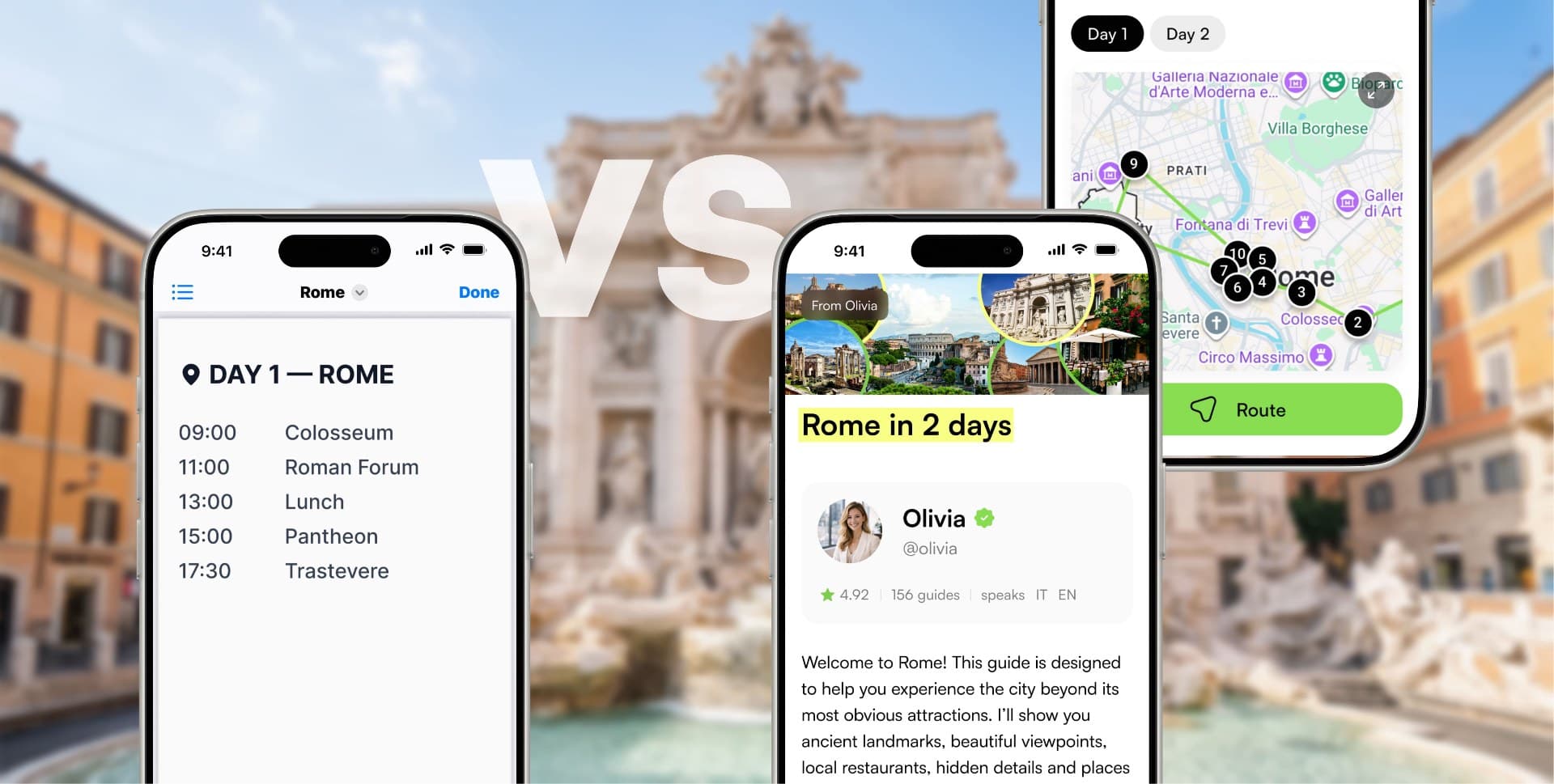
For many years, PDF travel guides have been one of the most common ways to share travel information. They're easy to create, simple to download and work on almost any device. Travel bloggers, tour guides, tourism boards and accommodation hosts have all relied on PDFs to distribute recommendations, itineraries and destination guides.
But the way people travel has changed.
Today's travellers expect more than a static document. They want interactive maps, organised recommendations, mobile-friendly navigation and information that stays up to date throughout their trip. Instead of downloading a file before travelling, many people now prefer accessing everything through a single link that works across devices.
This shift has led to the growing popularity of interactive travel guides—digital guides that combine itineraries, maps, recommendations and practical information into one connected experience.
So which format should you choose?
The answer depends on how you plan to use your guide. A printable PDF may still be the right solution in some situations, while an interactive travel guide offers significant advantages for guides that need to be updated, shared and reused over time.
In this article, we'll compare PDF travel guides and interactive travel guides, explain the strengths and limitations of each format, and help you decide which one best fits your needs.
What Is a PDF Travel Guide?
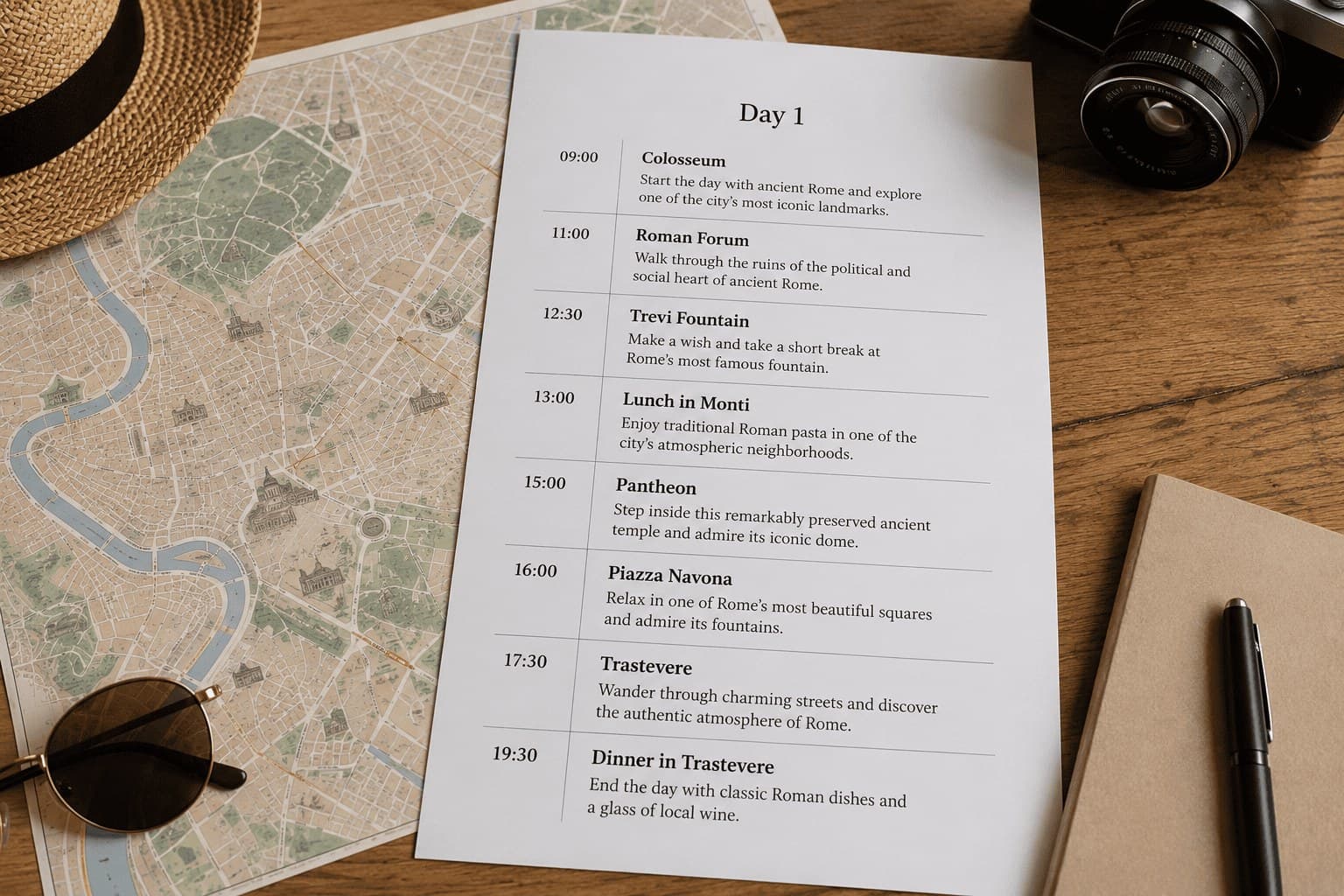
A PDF travel guide is a digital document that presents travel information in a fixed, printable format. Readers can download it to a phone, tablet or computer, and many choose to print it before travelling.
Most PDF travel guides include:
- destination overviews;
- suggested itineraries;
- maps;
- recommended attractions;
- restaurants and accommodation;
- practical travel tips;
- useful contacts and links.
Because PDFs preserve the same layout across different devices, they have become the standard format for downloadable city guides, tourism brochures and travel handbooks.
They remain a popular choice for tourism organisations, travel agencies, independent travel creators and accommodation providers who want to distribute a guide that users can easily save or print.
However, PDFs have one important limitation: they are static documents.
If a recommendation changes, a restaurant closes or opening hours are updated, the guide must be edited, exported again and redistributed as a new file. Over time, this often leads to multiple versions of the same guide circulating among different travellers.
Example of a PDF Travel Guide
What Is an Interactive Travel Guide?
An interactive travel guide is a digital guide designed to make travel information easier to explore, update and share.
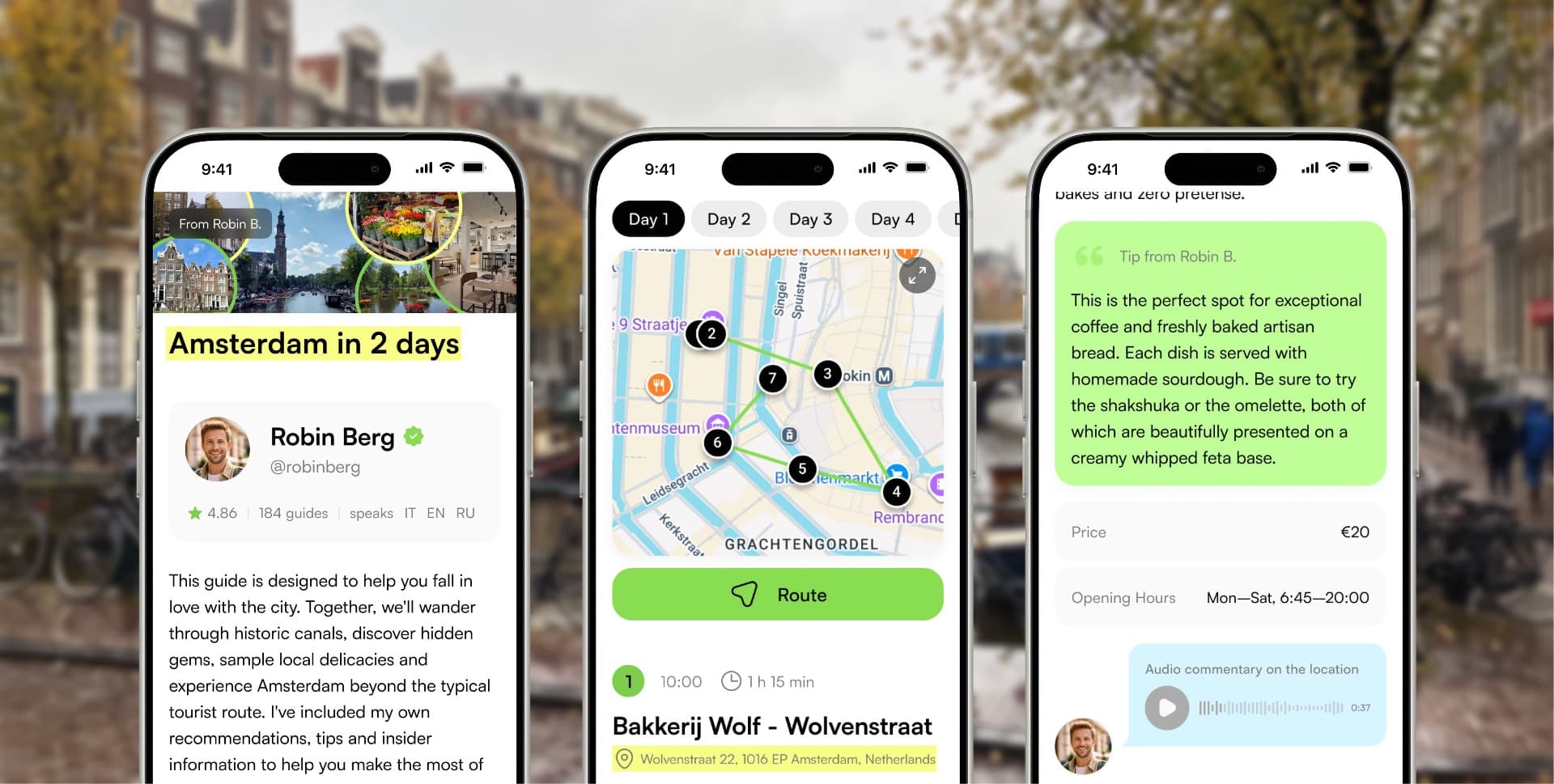
Instead of presenting recommendations as static pages, it combines itineraries, interactive maps, locations, travel tips and practical information into one connected experience that works across devices.
Unlike a PDF, an interactive guide isn't tied to a single version. Information can be updated at any time, allowing travellers to access the latest recommendations without downloading a new document.
Modern interactive travel guides often include:
- interactive maps with clickable locations;
- day-by-day itineraries;
- local recommendations and travel tips;
- photos and videos;
- useful links;
- practical travel information;
- continuously updated content.
For travel creators, tour guides, local experts and accommodation hosts, this means maintaining one guide instead of multiple PDF versions.
As recommendations evolve, the guide evolves with them.
If you'd like to learn more about how this format works, read our guide "What Is a Digital Travel Guide?", where we explain why interactive guides are becoming the new standard for organising and sharing travel knowledge.
Example of an Interactive Travel Guide
PDF Travel Guide vs Interactive Travel Guide: Key Differences
Although both formats help travellers organize information, they are designed for different purposes.
A PDF travel guide is a static document. Once it's created, the content remains the same until a new version is produced and shared.
An interactive travel guide is a living digital resource. Maps remain clickable, recommendations can be updated instantly and travellers always access the latest version through a single link.
The difference isn't simply about technology.
It's about how easily information can be maintained, shared and used throughout the travel experience.
The comparison below highlights the most important differences.
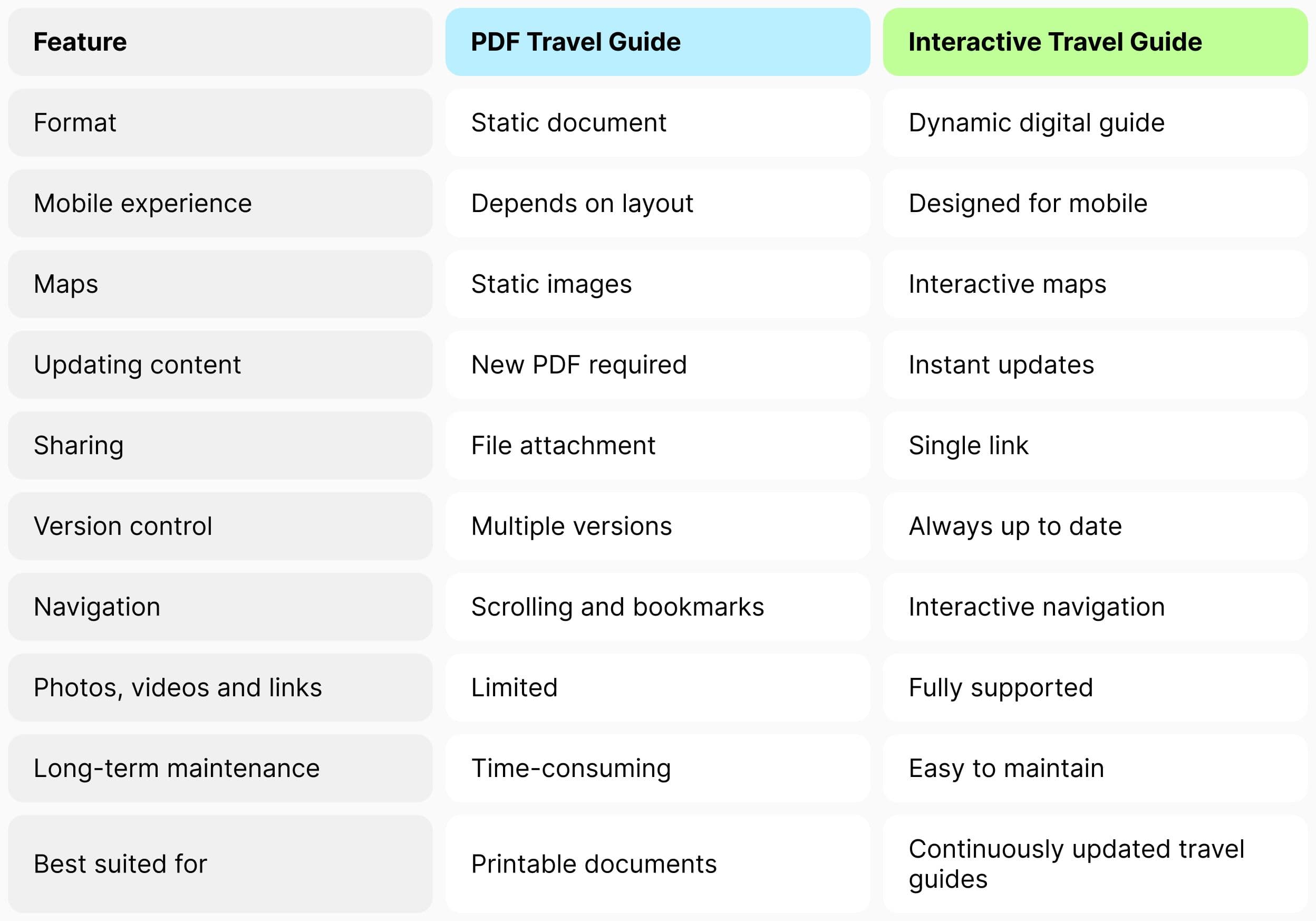
For occasional use, both formats can be effective.
However, when recommendations change regularly or guides are shared with multiple travellers, the advantages of an interactive format become much more noticeable.
Pros and Cons of PDF Travel Guides
PDF guides continue to be widely used because they are familiar, easy to create and work well in many situations.
Advantages
- Easy to create using almost any document editor.
- Can be downloaded and printed.
- Accessible without an internet connection once saved.
- Preserves the same design across different devices.
- Ideal for brochures, event guides and printable travel documents.
Limitations
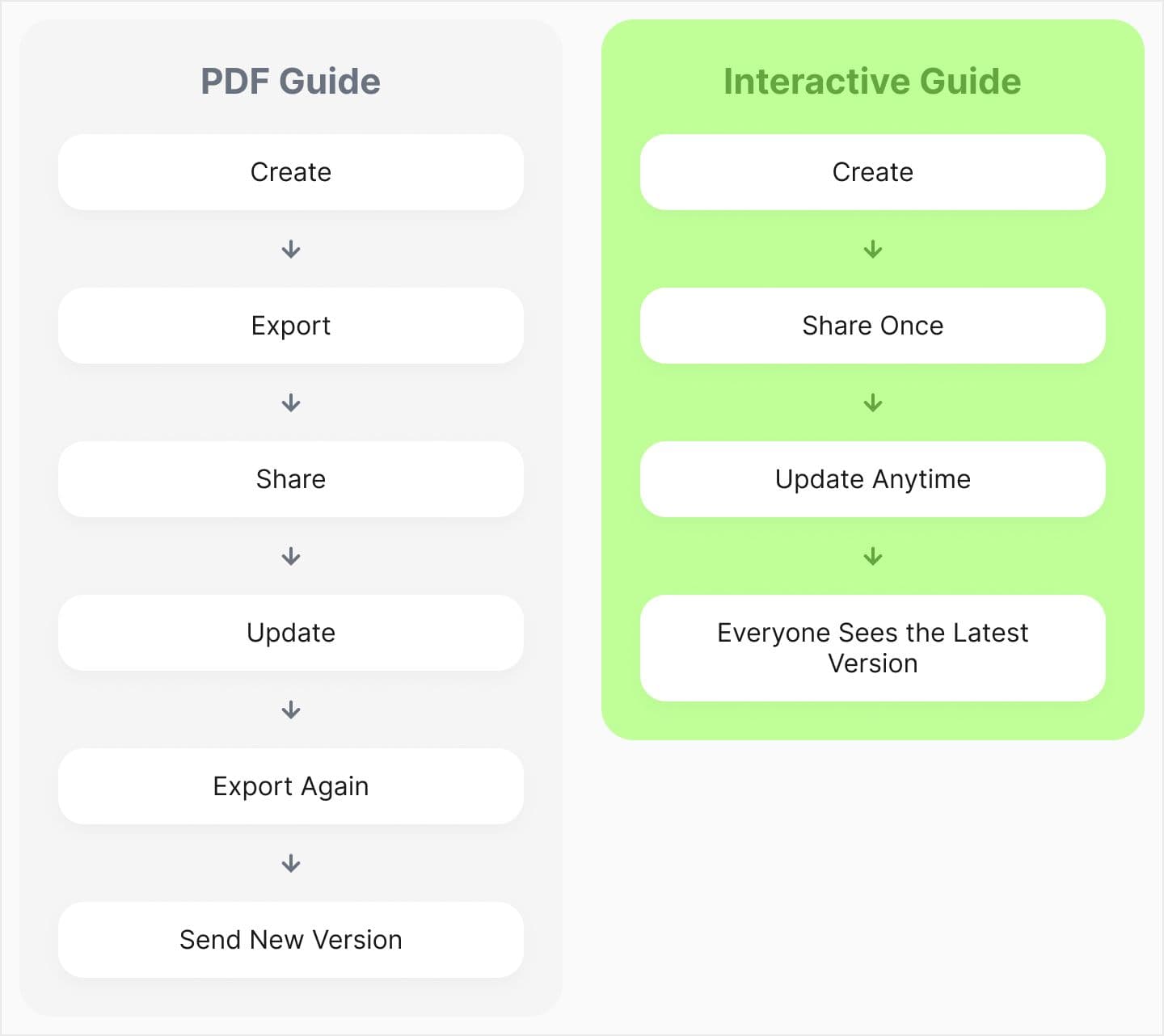
The biggest limitation of a PDF is that every update creates more work.
Changing a single recommendation often requires editing the original document, exporting a new file and sending the updated version to everyone who already downloaded the guide.
As guides grow larger, finding information also becomes less convenient. Travellers may need to scroll through dozens of pages to locate a restaurant, attraction or practical detail.
Navigation is another challenge. Although PDFs can contain links, they don't provide the seamless experience of interactive maps, connected recommendations and dynamic navigation.
For creators who regularly improve their guides, maintaining multiple PDF versions can quickly become difficult.
Pros and Cons of Interactive Travel Guides
Interactive travel guides were created to solve many of these challenges.
Instead of distributing files, creators publish one guide that can evolve over time while keeping the same link for every traveller.
Advantages
- Interactive maps with clickable locations.
- Mobile-first navigation.
- Instant content updates.
- Easy sharing through a single link.
- Better organization of recommendations and itineraries.
- Photos, videos and external resources integrated naturally.
- One guide can be continuously improved without creating new versions.
For travel creators, local experts, guides and accommodation hosts, this means spending less time managing documents and more time improving the travel experience itself.
Limitations
Interactive travel guides aren't the perfect solution for every situation.
For example:
- some features may require an internet connection;
- creators need to choose a platform for publishing and managing their guides;
- travellers who prefer printed documents may still want a downloadable PDF version.
Choosing the right format depends less on technology and more on how the guide will be used.
If the information is expected to change, grow or be reused over time, an interactive guide usually provides much greater flexibility.
Which Format Should You Choose?
The right choice depends on what you want your travel guide to achieve.
If you're creating a simple document that will be printed or shared once, a PDF may be the most practical option.
However, if your guide is something you plan to improve, update and share over time, an interactive travel guide offers far greater flexibility.
The comparison below can help you choose the format that best fits your needs.
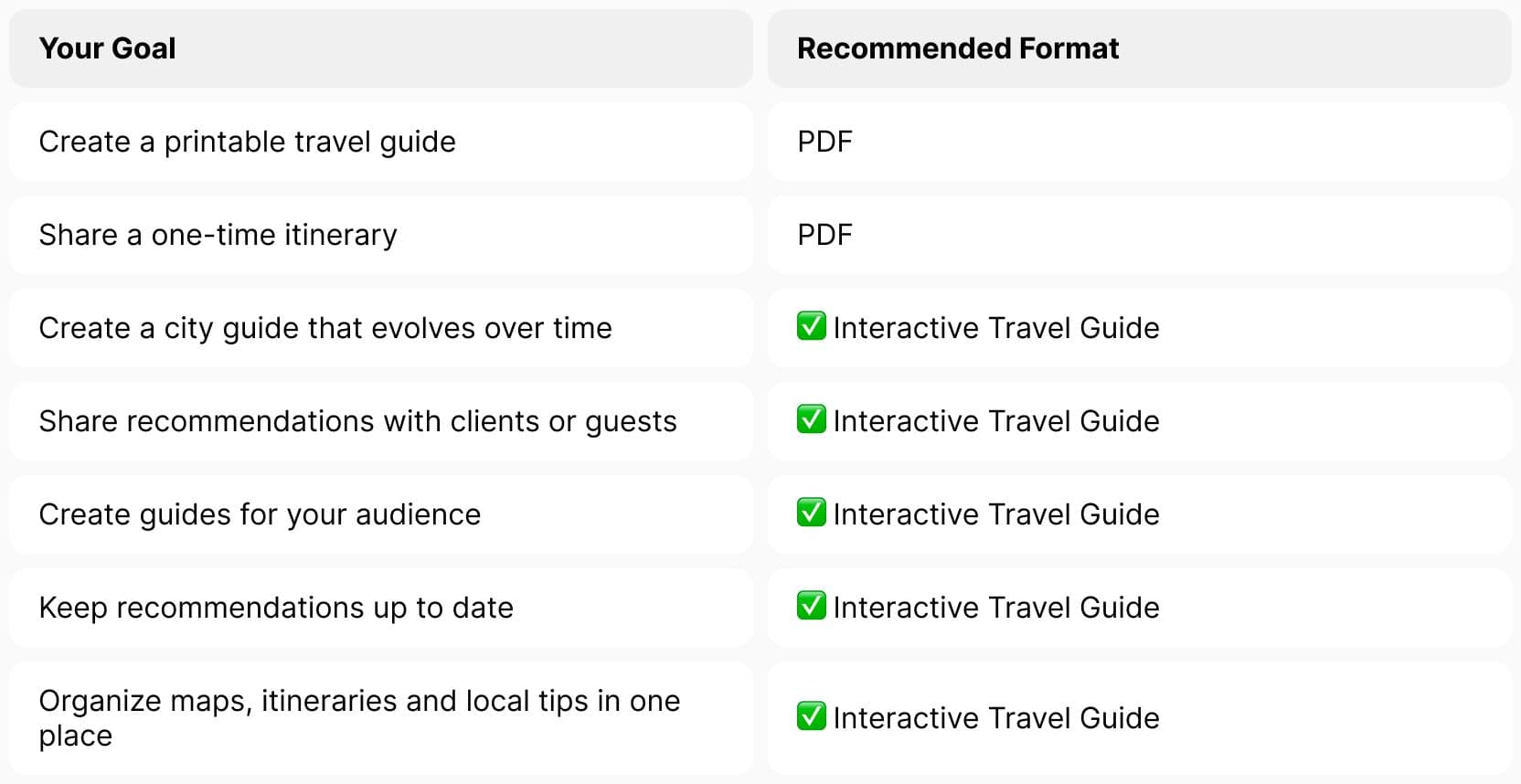
For many creators, the decision isn't about replacing PDFs completely. It's about choosing the right format for the right purpose.
When Is a PDF Still the Right Choice?
Despite the growing popularity of interactive travel guides, PDFs continue to be useful in many situations.
A PDF may be the better choice if:
- the guide needs to be printed;
- the information rarely changes;
- internet access may be limited;
- the guide is intended as a brochure, event programme or downloadable handbook;
- your audience specifically requests a printable version.
In these cases, the simplicity of a PDF is often an advantage rather than a limitation.
Why More Travel Creators Are Moving Beyond PDFs
As travel information becomes more dynamic, maintaining static documents becomes increasingly difficult.
Restaurants close, opening hours change, new places become popular and recommendations evolve over time.
Updating a PDF every time something changes quickly becomes inefficient.
This is why many travel creators, local experts, tour guides and accommodation hosts are moving towards interactive travel guides.
Instead of creating a new file for every update, they maintain a single guide that continuously improves over time.
Travellers always access the latest version through the same link, while creators spend less time managing documents and more time creating valuable travel experiences.
A great travel guide isn't finished when it's published. It continues to evolve with every new recommendation.
From Static Documents to Living Travel Guides
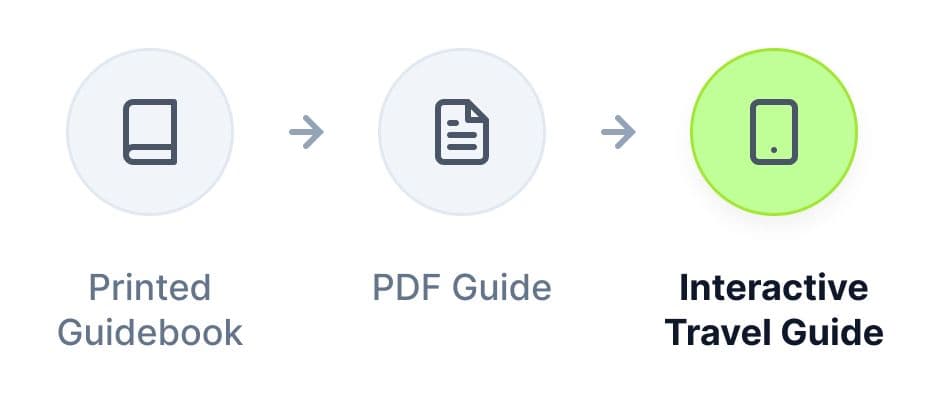
Over the past two decades, travel guides have evolved from printed books to PDF documents and, increasingly, to interactive digital experiences.
For travellers, this means easier access to information, better navigation and guides that stay relevant throughout the trip.
For creators, it means something even more valuable.
Instead of maintaining multiple versions of the same document, they maintain a single guide that grows with every update.
This shift isn't simply about replacing PDFs with another technology.
It's about transforming travel knowledge into a resource that can evolve, be reused and continue delivering value long after it's first published.

Frequently Asked Questions
What is a PDF travel guide?
A PDF travel guide is a downloadable document that contains travel information in a fixed format. It can be viewed digitally or printed for offline use.
What is an interactive travel guide?
An interactive travel guide combines itineraries, maps, recommendations and practical travel information into a digital experience that can be updated over time.
Which format is better?
Neither format is universally better.
PDFs work well for printable documents and static information, while interactive travel guides are better suited to content that needs to be updated, shared and reused.
Can I update a PDF travel guide?
Yes. However, every update requires creating a new version of the file and distributing it again.
Interactive guides can usually be updated instantly without changing the link shared with travellers.
Can interactive travel guides work offline?
Some platforms offer offline functionality, while others require an internet connection for certain features.
The available functionality depends on the platform you choose.
Should I create a PDF or an interactive travel guide?
If your guide is intended as a one-time printable document, a PDF may be the simplest solution.
If you plan to improve your guide over time, share it with multiple travellers or keep recommendations up to date, an interactive guide is generally the better choice.
Conclusion
PDF travel guides continue to play an important role in travel planning.
They're simple, familiar and remain an excellent choice for printable documents and information that rarely changes.
But travel has changed.
Today's travellers expect interactive maps, organised recommendations, mobile-friendly navigation and information that stays up to date wherever they go.
That's why interactive travel guides are becoming the preferred format for travel creators, local experts, tour guides and accommodation hosts.
Rather than replacing PDFs completely, they represent the next step in the evolution of travel information.
Ready to Move Beyond PDFs?
If you're creating travel guides that need to be updated, shared and reused over time, there is a better alternative than managing multiple PDF files.
Octripus helps you turn your notes, itineraries and local recommendations into interactive digital travel guides that are easy to update and simple to share through a single link.
Instead of creating a new version every time something changes, you maintain one guide that always stays up to date.
Create Your First Digital Travel Guide →